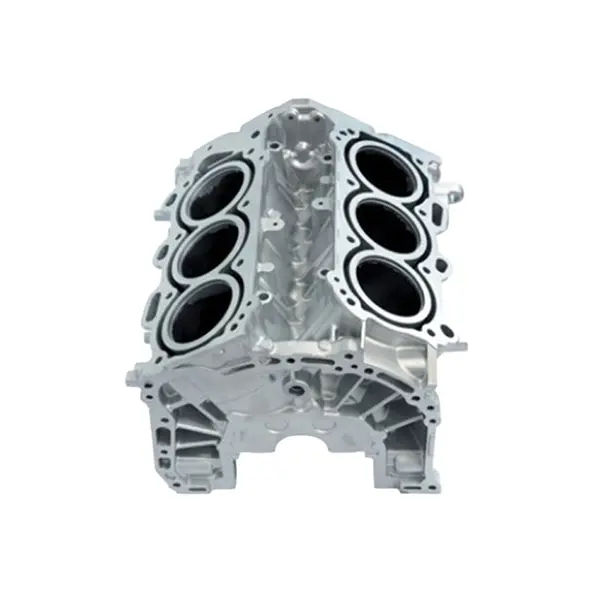
Die cast parts are designed twice: once by the product engineer, once by the die. This guide covers the geometry habits — uniform walls, honest draft, generous radii, ribs instead of mass — that make the second design easy, drawn from the ADC12/A380 range this factory casts.
If die casting design has a constitution, its first article is wall uniformity. Molten aluminum filling a die and then solidifying behaves best when sections are even: metal flows predictably, cooling is balanced, and shrinkage — the root of porosity and distortion — is minimised. Thick sections cool slowly, starve, and sink; paper-thin sections freeze before they fill. The art is a consistent wall that the ribs and bosses below then make strong, rather than a lumpy mass that tries to be strong by thickness alone.
Where sections must change, graduate them. A tapered transition lets metal and heat flow; a step change traps both. These are the first things our aluminum die casting DFM review looks at, because they decide porosity behaviour and cosmetic quality before any machine setting is chosen — the defect-prevention logic detailed in our die casting defects guide.
A die casting must come out of a steel die, and draft — the slight taper on faces parallel to the die's opening direction — is what lets it. Faces without draft drag, mark, and stress the part at ejection; faces with honest draft release cleanly thousands of times. Designers accustomed to machining, where parallel faces are free, routinely under-draft castings; designers accustomed to moulding know the taper is not a defect but the process's handwriting.
Draft interacts with the parting line — the plane where the die halves meet — and both should be considered together, ideally with the die designer in the conversation. Where a face genuinely cannot carry draft (a precision bore, a sealing face), the standard solution is to cast it with stock and machine it afterwards — a route this factory plans naturally, with its machining division beside the casting shop.
Sharp internal corners are where castings crack, dies erode and stress concentrates; radii are the cure for all three. Internal fillets let metal flow around corners without tearing or turbulence, let the die survive longer without cracking at the same stress points, and leave a finished part stronger in service. External corners benefit too, especially on parts that will be handled, coated or polished.
The design habit is to radius by default and sharpen only with a reason — a mating requirement, a locating edge. When a drawing arrives with sharp internals throughout, the review will propose fillets and explain which ones matter most. It is nearly free performance: the die is cut once, and every part thereafter inherits the benefit.
Ribs are how castings get stiffness without the thick walls that cause porosity: thin vertical webs that brace large faces, placed where bending must be resisted. Bosses are how castings receive screws: raised pads that hold threads or inserts, ideally tied into walls with gussets so loads path into the structure. Both features obey the constitution — they connect to walls with fillets, carry draft, and keep local thickness near the wall's own, cored or relieved where they would otherwise become hot, slow-cooling masses.
Our range's flagship — the custom ADC12 A380 die casting part — is the kind of general structural casting where these features do the daily work. When you send a design, marking which bosses are load-critical and which faces are cosmetic lets the review spend its attention where the part's success is decided.
A casting is rarely the end of its own story. It will be trimmed, perhaps machined, certainly finished — polished and lacquered, powder coated, or anodized after machining, all routes in this factory's range — and assembled against other parts, often from this factory's other divisions. Design decisions echo into every one of those steps: ejector placement versus cosmetic faces, gate vestige position versus visible surfaces, datum faces versus machining fixtures.
The complete habit, then, is to design the part as a citizen of its whole route. The DFM review is structured to do exactly that with you — casting, machining, finishing and assembly in one conversation. Send the design via the contact form before the die is a gleam in anyone's eye, and the guidelines in this article get applied to your part specifically, which is the only place they ever really matter.
Every rule in this article serves one principle: a die casting succeeds when metal can flow, freeze, and leave the die without argument. Walls, draft, radii and ribs are simply the four places that argument usually starts. If a design feature seems to fight the metal, it probably does — and the review's job is to find the version of the feature that keeps the function and drops the fight.
Tell us the material grade, quantity and finish you need for your project. Our engineers review every drawing for die casting, machining or stamping feasibility before quoting — no obligation.
Send Drawings for a DFM Review